Redefining care through an AI-powered companion
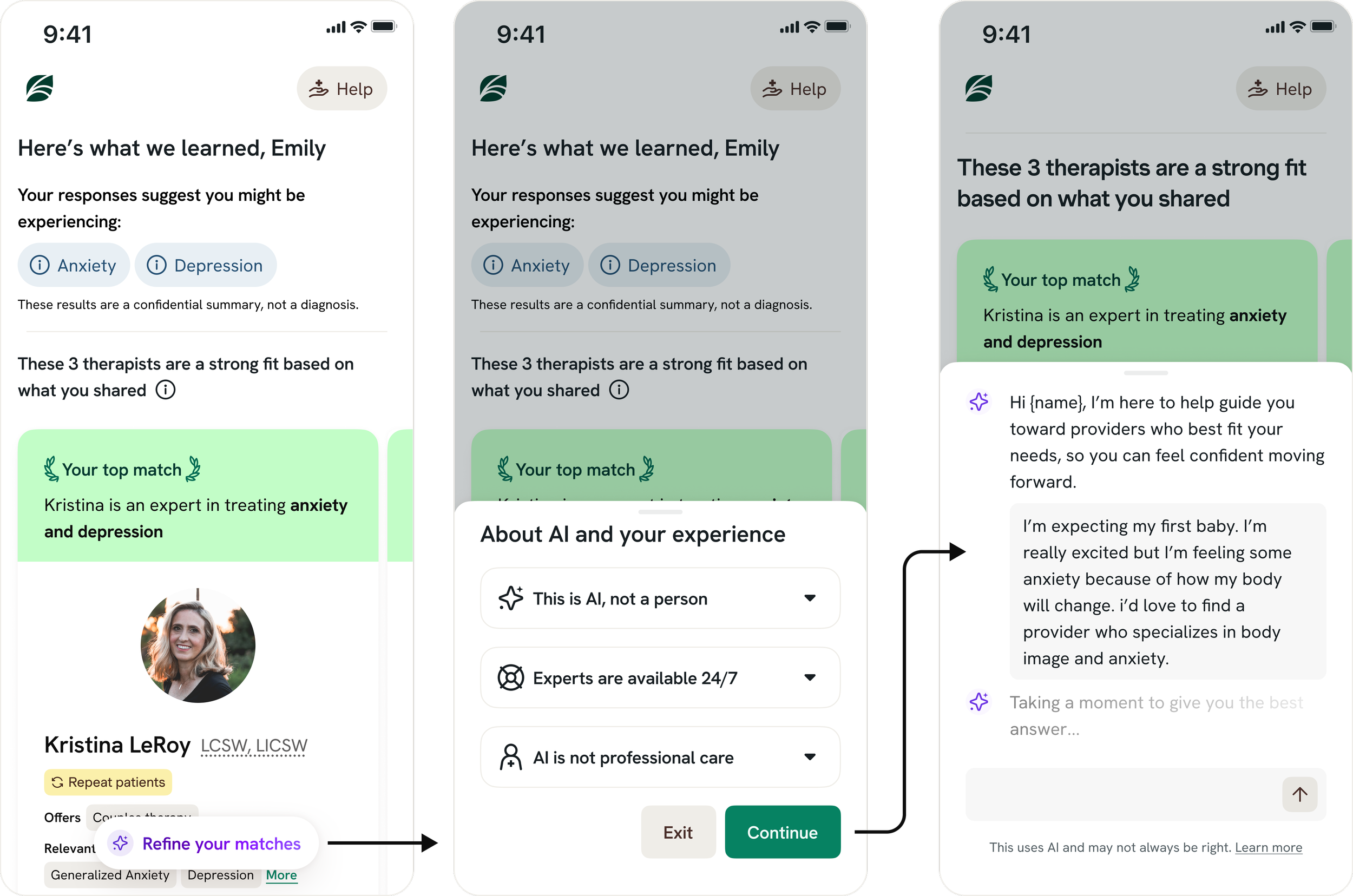
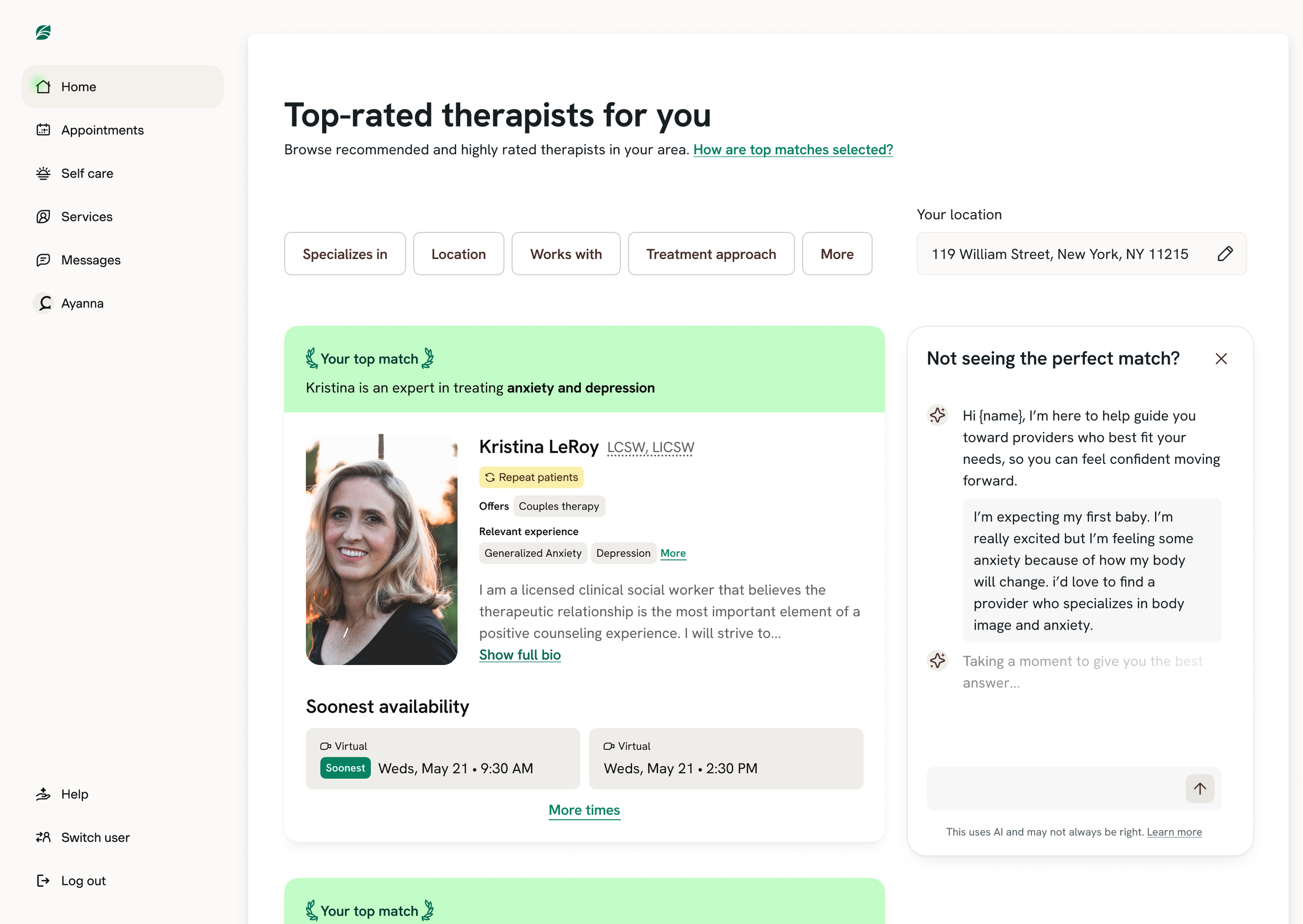
Care Guide is Spring Health’s first step in evaluating the product–market fit of a conversational AI companion within the member journey. The MVP was intentionally lightweight, focused on testing whether natural-language guidance could reduce booking friction and how members would respond to an AI-driven support model.
By letting members describe what they need in their own words and receive immediate, tailored guidance, the MVP tested the core value proposition of a future, more integrated AI companion.
Early results were strong: 54% of members who chatted with Care Guide booked an appointment, showing that even a minimal conversational experience can reduce friction, increase decision confidence, and accelerate access to care.
These signals validate the potential of an AI companion in care navigation and lay the foundation for deeper investment in the 2026 vision.
Role: Lead designer
Timeline: H2, 2025
Core partners: Executive Leadership, Product, Design, Engineering, Clinical, Content, Research, Marketing
Success metrics
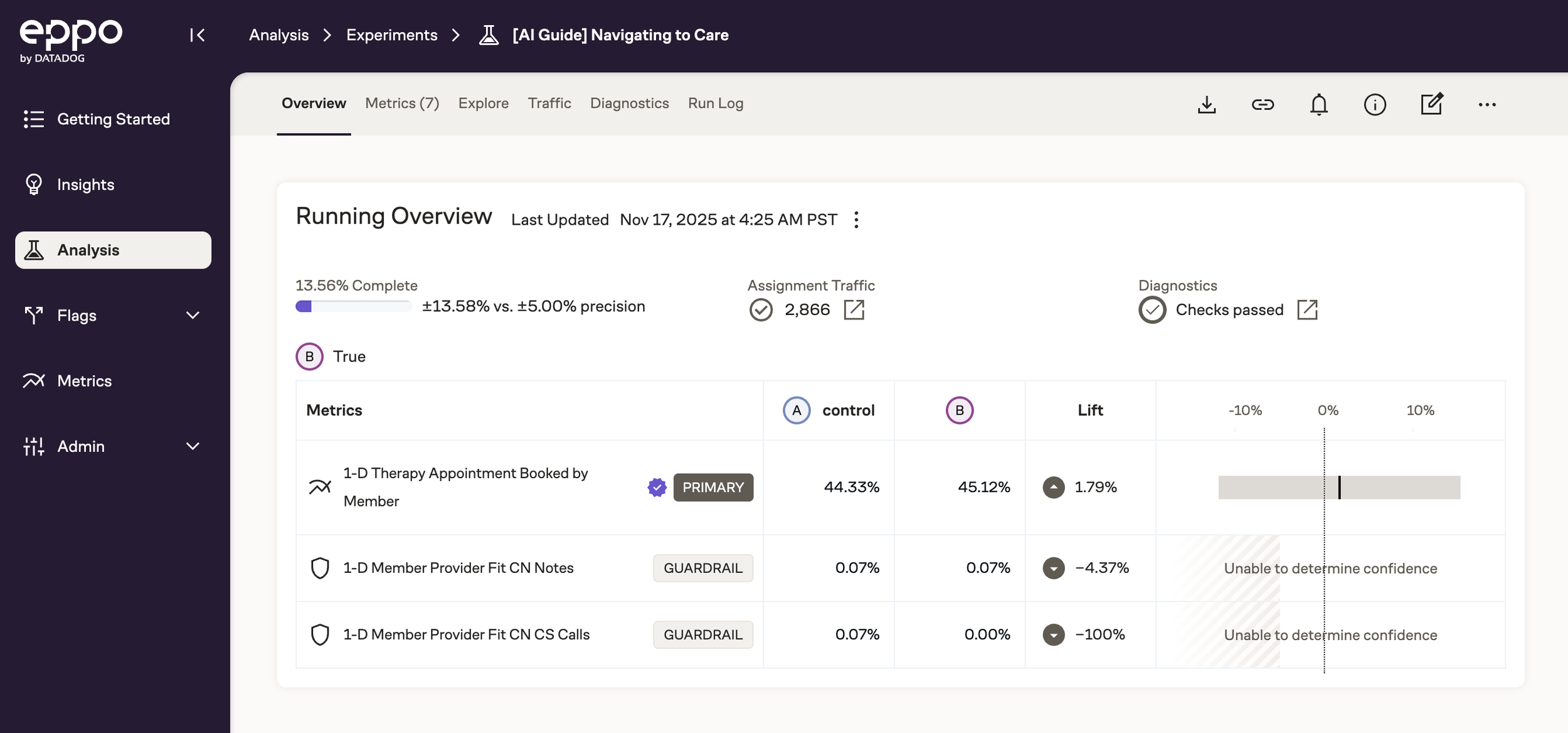
1.79%
Increase in bookings when Care Guide was visible
54%
Engaged members booked, showing strong impact on decision confidence
31%
Engaged members opened Care Guide and started a conversation
8%
Decrease in Care Navigator calls about provider matching support
Challenge
Only ~35% of members who create a Spring Health account book care, largely due to friction in provider selection and unclear navigation. Many aren’t sure who to book with, can’t find a good fit, or don’t know where to go for help.
Although Care Navigators help bridge these gaps, requiring members to call or schedule time with a human doesn’t scale, and often becomes another barrier during moments when members need clarity fast.
As AI chat experiences become mainstream, member expectations have shifted. They want a simpler, conversational way to express their needs and get immediate, confident guidance to the right next step in care.
Opportunity
Members often struggle to articulate what they need and navigate their options, and relying on scheduled or phone-based support adds unnecessary friction. They need a simple way to express their needs in their own words and get immediate, reliable guidance.
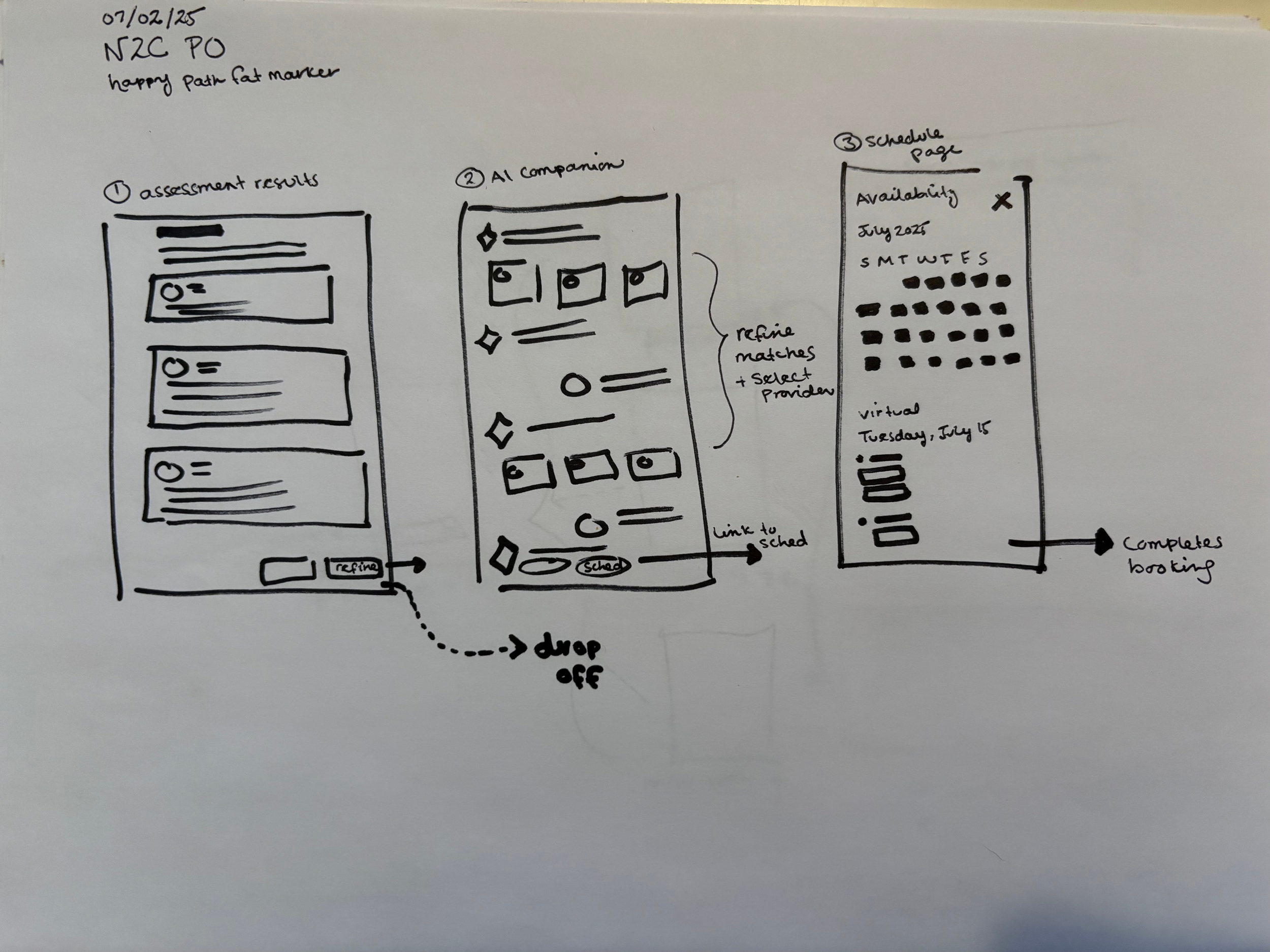
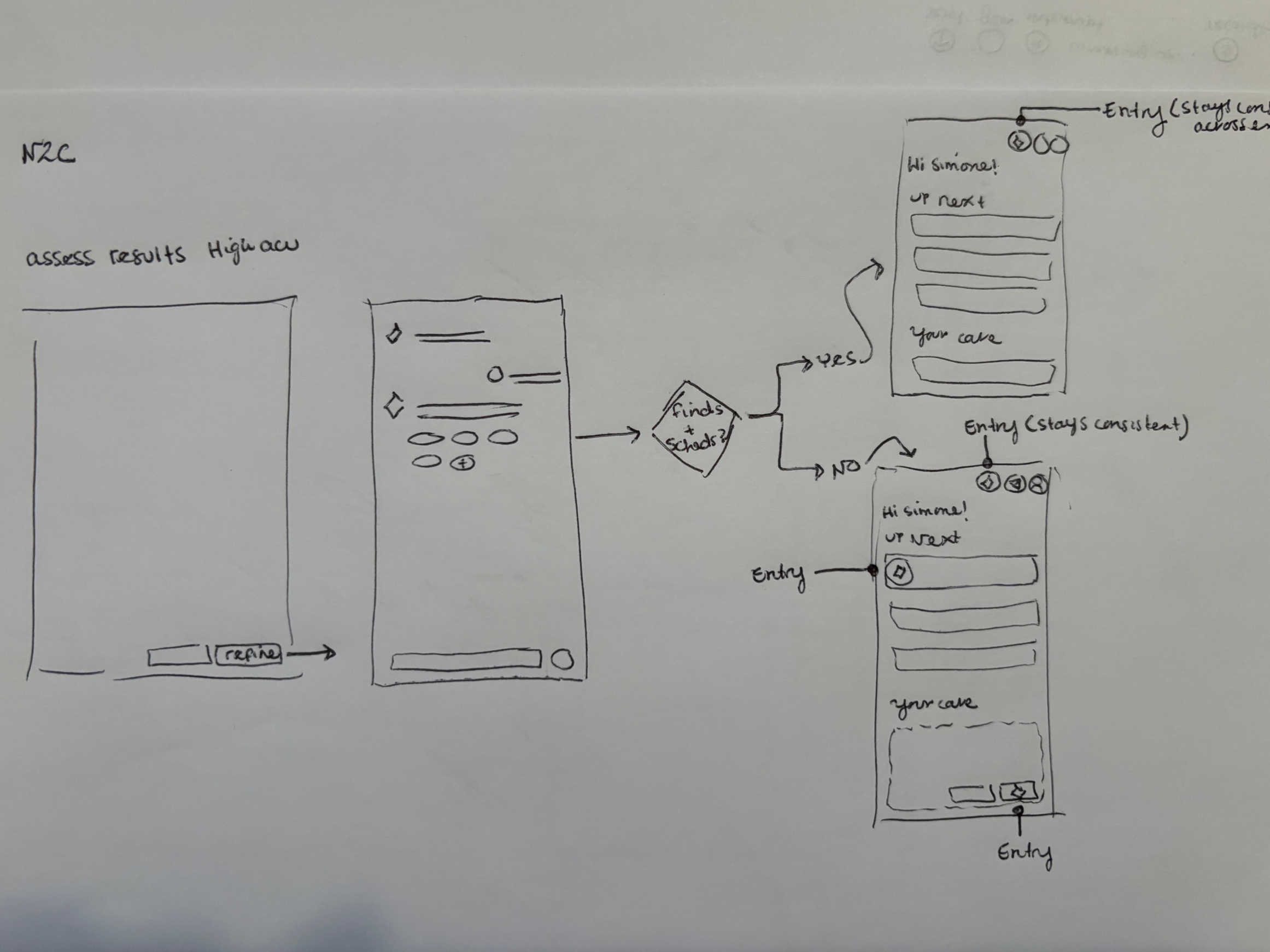
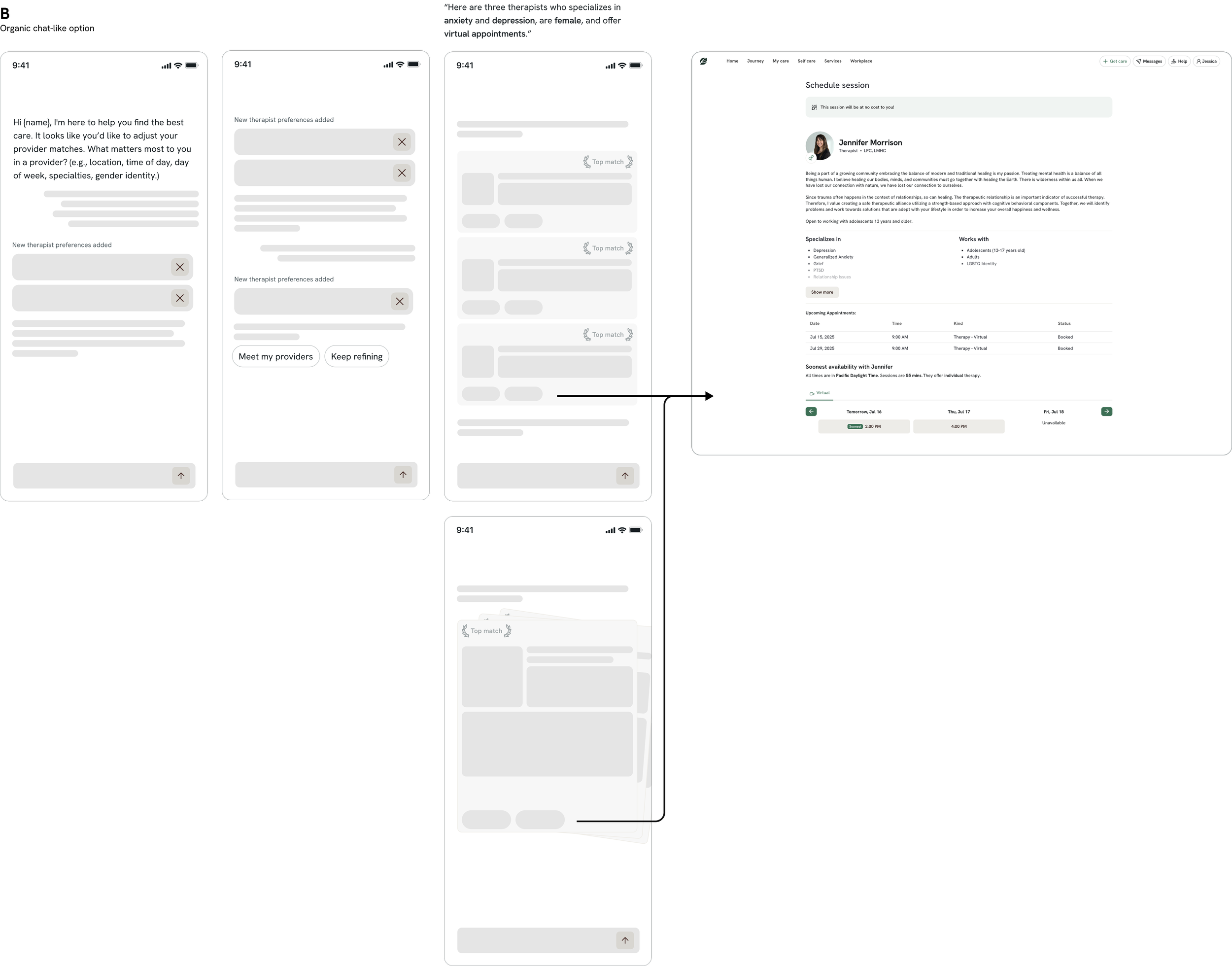
Care Guide creates that pathway, a single conversational entry point that helps members find the right provider, recover a poor fit, access support, or escalate to a human Navigator when needed. By reducing decision friction and meeting members where they are, Care Guide enables a more confident, intuitive path to care..
Focus & milestones
For 2025, our focus narrowed in on foundational adoption, proving hypotheses, and validating measurable impact before scaling to the full 2026 vision.
Q3 goals 2025:
A/B test Reimagined Onboarding flow with Care Guide integrated
Evaluate funnel performance, conversion to care, and UX feedback
Gather early signal from pilot labs and internal Spring Health rollout
Build and launch MVP for Q4 pilot with select customers
End-of-Year Milestones:
Demonstrate that Care Guide MVP positively impacts conversion to care
Achieve statistically significant A/B test results with low-risk FFS customers
Monitor sustainability metrics and CN cost efficiency (⅓ interaction diversion = +0.5 pt GM)
Hypothesis
Our MVP focused on validating three core hypotheses about how conversational guidance could improve the care navigation experience:
Natural-language onboarding increases bookings.
Members who describe their needs in their own words will feel more understood and be more likely to book care.
Goal: Increase bookings by activating even a portion of the ~34% of members blocked by provider fit.Personalized recommendations improve provider trust.
If Care Guide refines recommendations based on member input, members will book more confidently from the recommended list.
Goal: Shift more members to book directly from recommended providers (from 45% → 50%).AI triage reduces Care Navigator volume.
By resolving simpler navigation needs, Care Guide will reduce reliance on Care Navigators for provider matching.
Goal: Achieve ~⅓ interaction diversion, contributing up to +0.5 pts GM.
Process
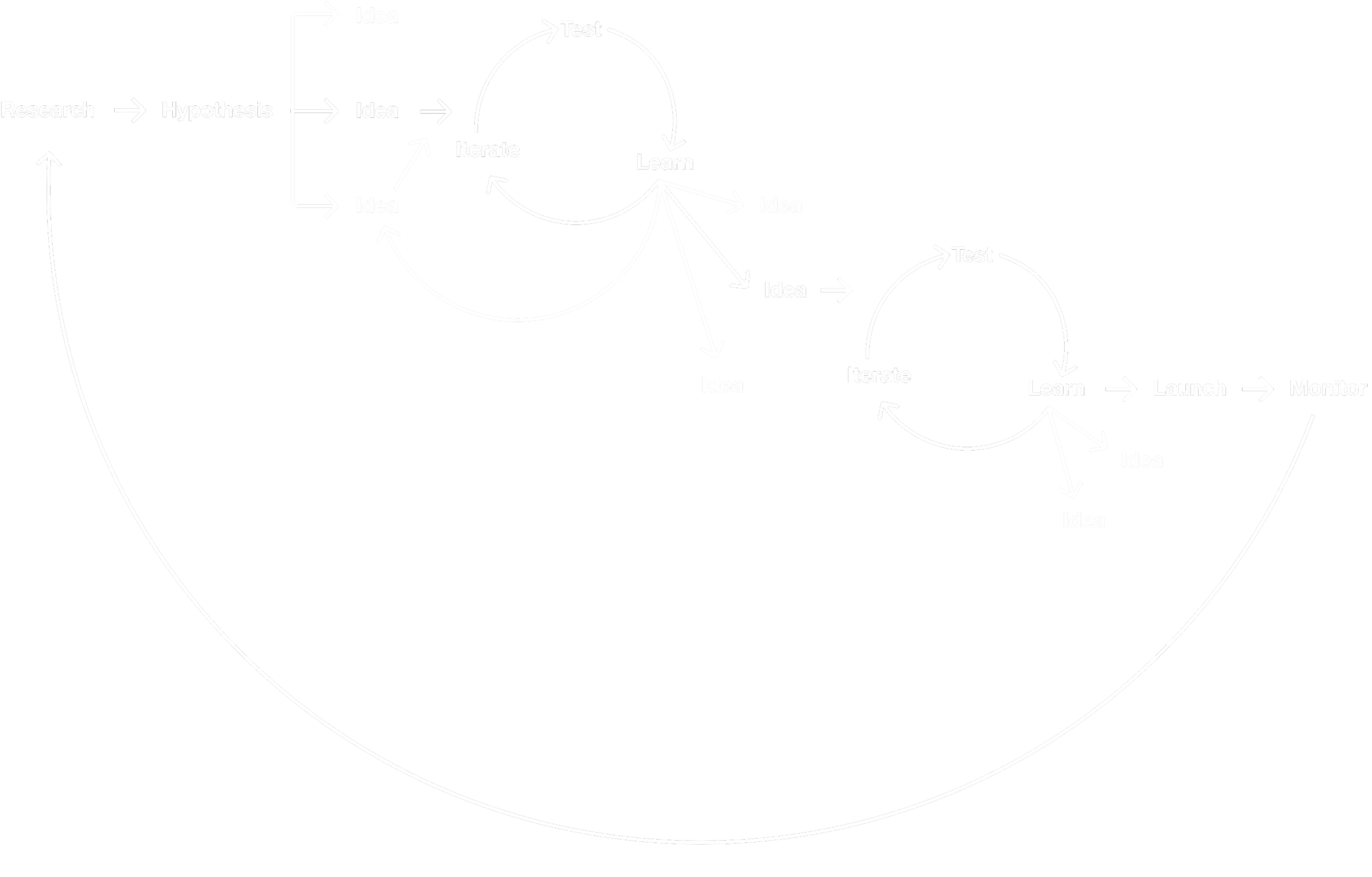
To prepare for the A/B test, we ran a focused cross-functional process grounded in speed, clarity, and rigor. We partnered with the Member Funnel and Connect pods to map friction across the booking journey, benchmarked leading AI chat experiences, and aligned early with engineering to identify reusable systems and accelerate feasibility.
We grounded our direction in recent onboarding and provider-fit research, then developed lightweight conversational prototypes to align design, product, engineering, and leadership on the intended experience.
Before launch, we completed thorough clinical, content, and prompt-quality reviews, using LangSmith to refine prompts for accuracy, compassion, and adherence to VERA-MH standards.
Finally, we partnered with data science to finalize the experiment plan and define success metrics across conversion, task completion, and member sentiment.
A/B test and outcomes
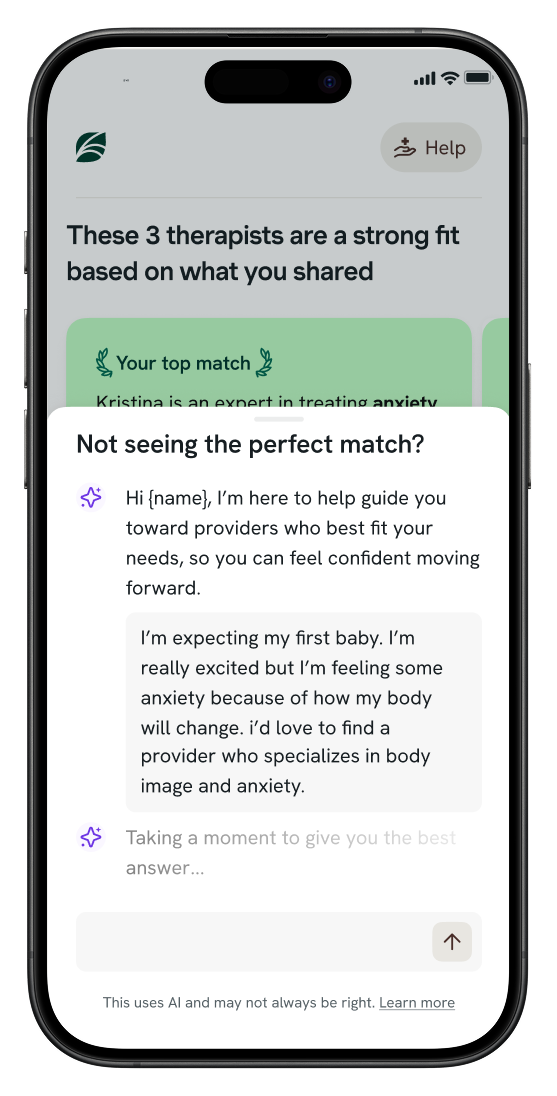
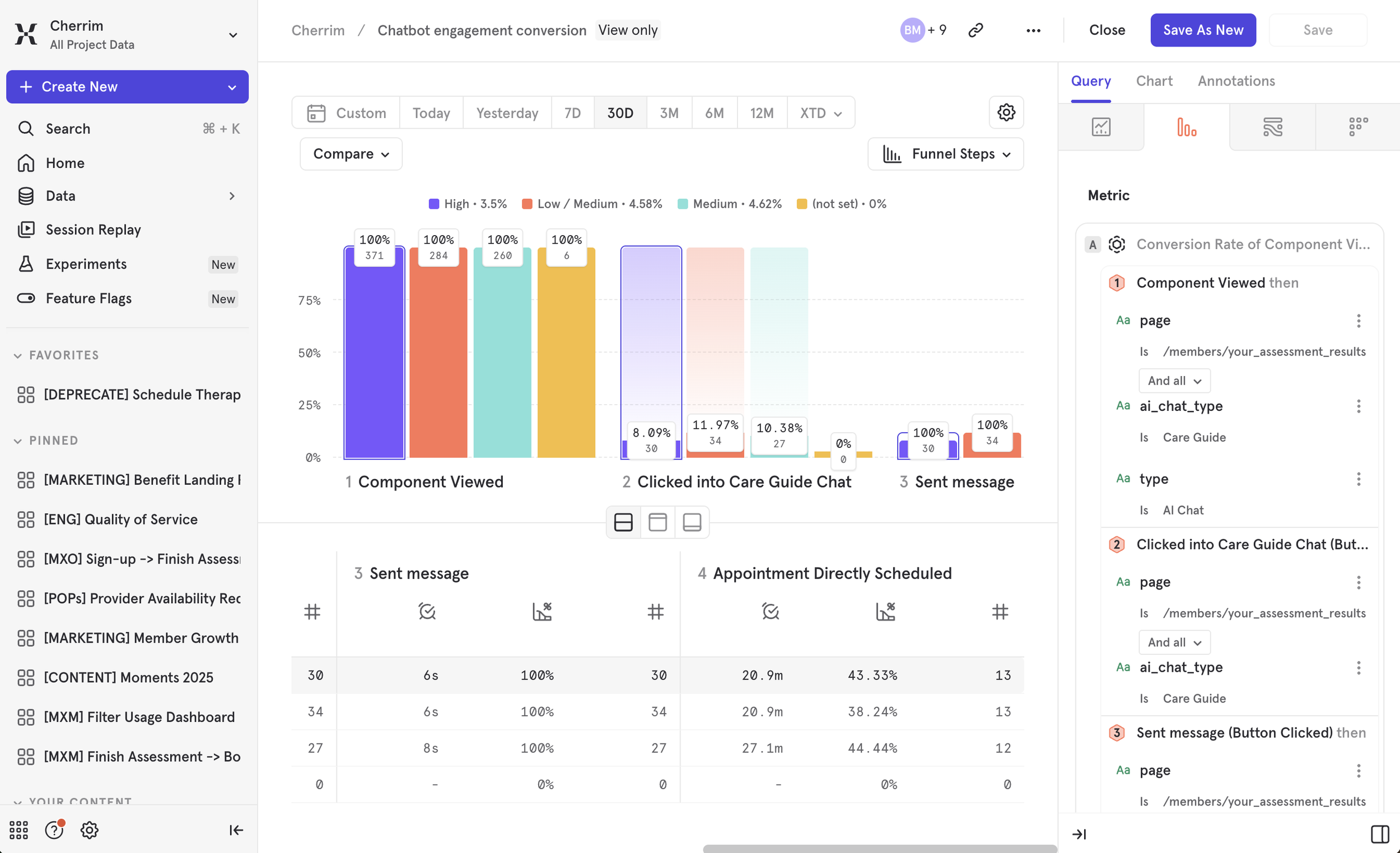
In October 2025, we launched the Care Guide MVP as an A/B test to evaluate whether a lightweight conversational assistant could improve booking conversion. The minimal experience appeared on the assessment results page for eligible members and allowed them to refine provider recommendations using natural language.
Tested across 22 customer groups (~1.8M covered lives), the MVP showed strong early signal:
54% of members who chatted with Care Guide booked an appointment, outperforming the control group
Members described the experience as easy, personalized, and less overwhelming
Data validated that conversational guidance reduces decision friction during a critical stage of the booking journey
These results demonstrated that even a simple conversational layer can positively influence conversion and help members move from intent to action with greater confidence.
Impact & Reflection
Although Care Guide is still evolving, early signals show meaningful progress toward simplifying and enriching the care navigation experience. Members who engaged with the MVP described it as personalized, easy to use, and comforting, validating that conversational guidance resonates with their needs.
The A/B test and follow-up research demonstrated that Care Guide reduces decision friction, increases confidence in booking care, and strengthens trust in Spring Health’s support system. As we build toward the 2026 vision, Care Guide is already showing how responsible AI can extend human care, meeting members where they are and guiding them with empathy and clarity.
Designing Care Guide reaffirms that AI in mental health isn’t about replacing humans but amplifying their impact, creating technology that listens, supports, and helps people move toward healing.